
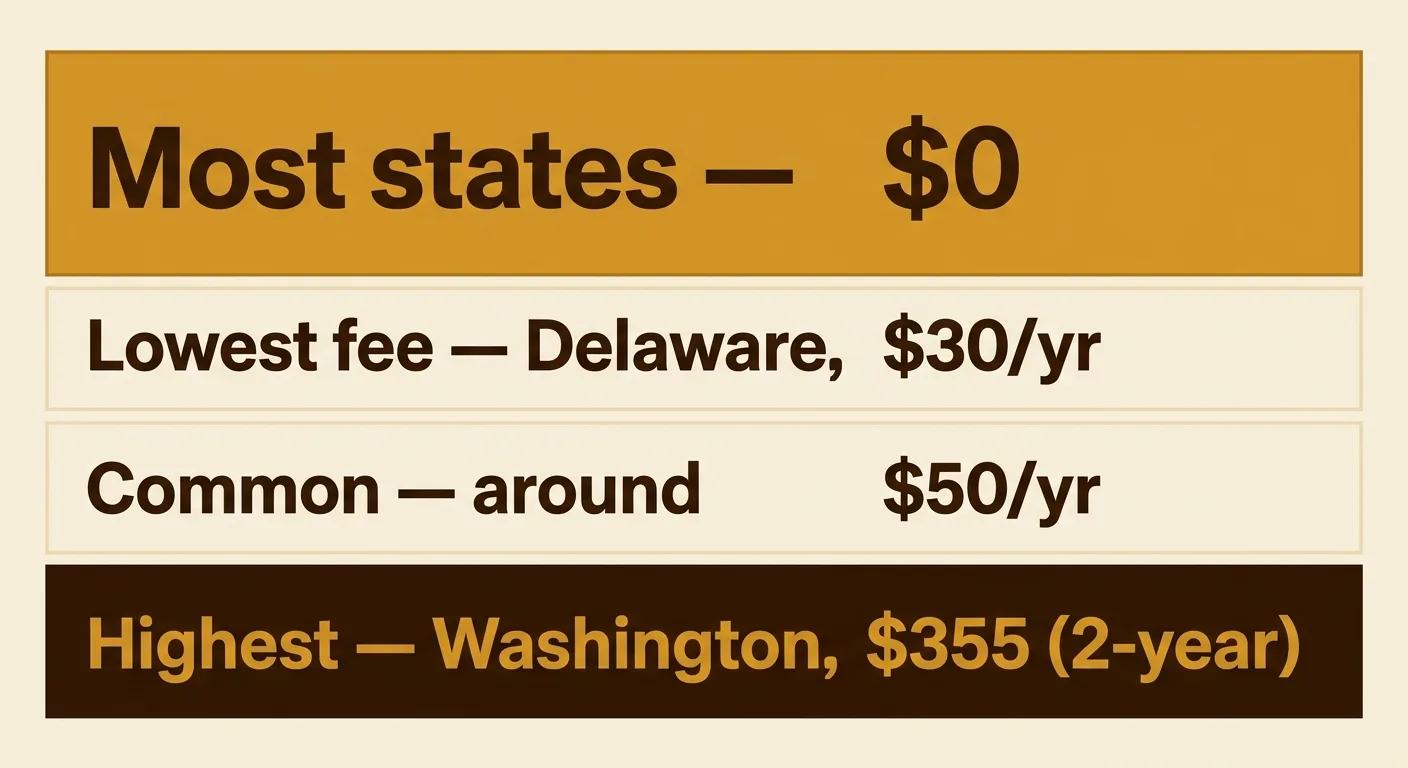
Short answer: in most states, a cottage food license costs nothing. Roughly two-thirds of U.S. states charge no state permit or registration fee to sell home-baked goods under a cottage food law. In the states that do charge, the fee is usually small — the range runs from about $30 on the low end to $355 at the very top. So if the cost of a license is what's holding you back from selling, it probably shouldn't be.
The longer answer is worth reading, because "cottage food license cost" hides two traps. First, states use different words — license, registration, permit, or nothing at all — for the same idea, and the word doesn't tell you the price. Second, the state cottage food fee is often not the only cost of getting started. This guide covers both: what the state permit itself costs, state by state, and the other startup costs people forget to add in.
How Much Does a Cottage Food License Cost?
In most states, a cottage food license is free — more than 30 states charge no state permit or registration fee at all. Where states do charge, the fee typically falls between $30 and $355 per year, with many clustered around $50. The single most expensive state permit is Washington's, at $355 — but that covers two years, not one.
That's the headline. Before the state-by-state breakdown, one clarification that saves a lot of confusion: the name of the requirement doesn't predict the price. Some states make you register with the Department of Agriculture (often free), some require an actual permit with a fee, some require a home-kitchen inspection for higher sales tiers, and a large number require nothing at all to start selling low-risk baked goods. "Do I need a license" and "how much does it cost" are related but separate questions — and for a lot of bakers, the answer to both is reassuringly simple.
The States That Charge Nothing (Most of Them)
The biggest surprise in cottage food licensing is how many states let you start for free. In more than 30 states, there is no state cottage food permit or registration fee for standard direct-to-consumer sales. Texas is the cleanest example — no state permit and no fee for standard cottage food sales. Florida, Ohio, Wisconsin, Tennessee, Kansas, and Iowa sit in the same free-to-start bucket. Georgia is a sign of where things are heading: its 2025 reform (HB 398) scrapped the state license, the fee, and the old sales cap in a single bill.
A few of these states offer an optional registration or ID number — usually free, and often just for label privacy so you don't have to print your home address. Taking it is a choice, not a cost of entry. The practical takeaway: in most of the country, the price of a cottage food license is $0, and the thing standing between you and your first legal sale is a label and a food-safety habit, not a check to the state.
What It Costs Where States Do Charge
A minority of states do charge for a cottage food permit. Here's the range, from lowest to highest:
| State | Fee | Term | Notes |
|---|---|---|---|
| Delaware | $30 | Annual | Lowest flat annual fee. |
| Pennsylvania | $35 | Annual | |
| Montana | $40 | Annual | |
| Connecticut | $50 | Annual | |
| Illinois | Up to $50 | Annual | |
| Kentucky | $50 | Annual | Set by 902 KAR 45:090. |
| Utah | $50 | Annual | Cottage food path; Utah's Food Freedom path has no state fee. |
| Rhode Island | $65 | Annual | |
| New Jersey | $100 | 2-year | ~$50/year equivalent. |
| California | ~$100–$500+ | Annual | A county-set range — see below. |
| New Hampshire | $150 | Annual | Class H Homestead license. |
| Washington | $355 | 2-year | Highest — ~$178/year equivalent. |
Even at the top of the range, this is a small number relative to what it costs to start most food businesses. The whole point of cottage food law is to let you test a product from your home kitchen without renting a commercial space — and the fee schedule reflects that.
Why California's Cottage Food License Costs More
California is the state most people find confusing, because there isn't one California fee. The cost depends on two things: your class and your county. A Class A operation (direct sales only) registers with the county and pays a lower fee; a Class B operation (which can also sell through stores and restaurants) requires a permit and a home-kitchen inspection, which costs more. Because the fees are set at the county environmental-health level, the same class can cost different amounts in different counties — which is why you'll see everything from around $100 to $500 or more quoted for "a California cottage food license." If you're in California, check your specific county's environmental health department for the current number, and budget separately for the Class B inspection if you plan to sell wholesale.
The Costs Beyond the Permit Fee
Here's the part most "how much does a cottage food license cost" articles skip: the state permit fee is frequently not the only cost of getting legal. A "$0 state fee" state can still involve a few other line items, and they're easy to miss:
- A food-handler course. About half of states require the person making the food to hold a food-handler or food-safety certificate. It's usually a 2–4 hour online course that runs $10–$25.
- A local business license. Your city or county may require a general business license regardless of your cottage food status — typically $25–$100 a year. This is separate from the state cottage food rules and catches a lot of bakers off guard. We break this down in do I need a business license for cottage food.
- A sales tax permit. If your sales are taxable in your state, you may need to register with the Department of Revenue. That registration is usually free, but it's a step, not a skip.
None of these are large, but they add up, and they're the reason "my state permit is free" and "getting started cost me nothing" aren't always the same sentence. Once you're set up, the more useful question becomes how to price so these costs — and your time — actually get recovered, which is its own skill: see how to price baked goods from a home bakery.
Annual, Two-Year, or Changing: Read the Fine Print
Two details trip people up when they compare fees:
Term. Most cottage food permits are billed annually, but not all. Washington ($355) and New Jersey ($100) both charge for a two-year permit, so their per-year cost is roughly half the sticker number. When you compare states, compare per-year.
Change. Fees move. Minnesota, for example, is moving to a single $30 annual fee for all registrants effective August 1, 2027; until then it uses a tiered structure. Any fee figure — including the ones here — is a snapshot, so confirm the current number in your state's guide before you budget around it.
Frequently Asked Questions
The cost of a cottage food license is rarely the real barrier to selling from home — for most bakers it's free, and where it isn't, it's the smallest number on the startup list. What matters more is getting the rest right: your state's rules, a compliant label on every order, and a way to take orders without living in your DMs. If you're just getting going, how to start a home bakery walks through the full setup. That's exactly what MyPorch is built to handle — start with your state's guide and a free account, and get the legal details off your plate so you can bake.
This article is informational and not legal advice. Cottage food fees and rules change and vary locally — confirm the current requirements with your state agency, listed in your state's guide, before you rely on a number here.