
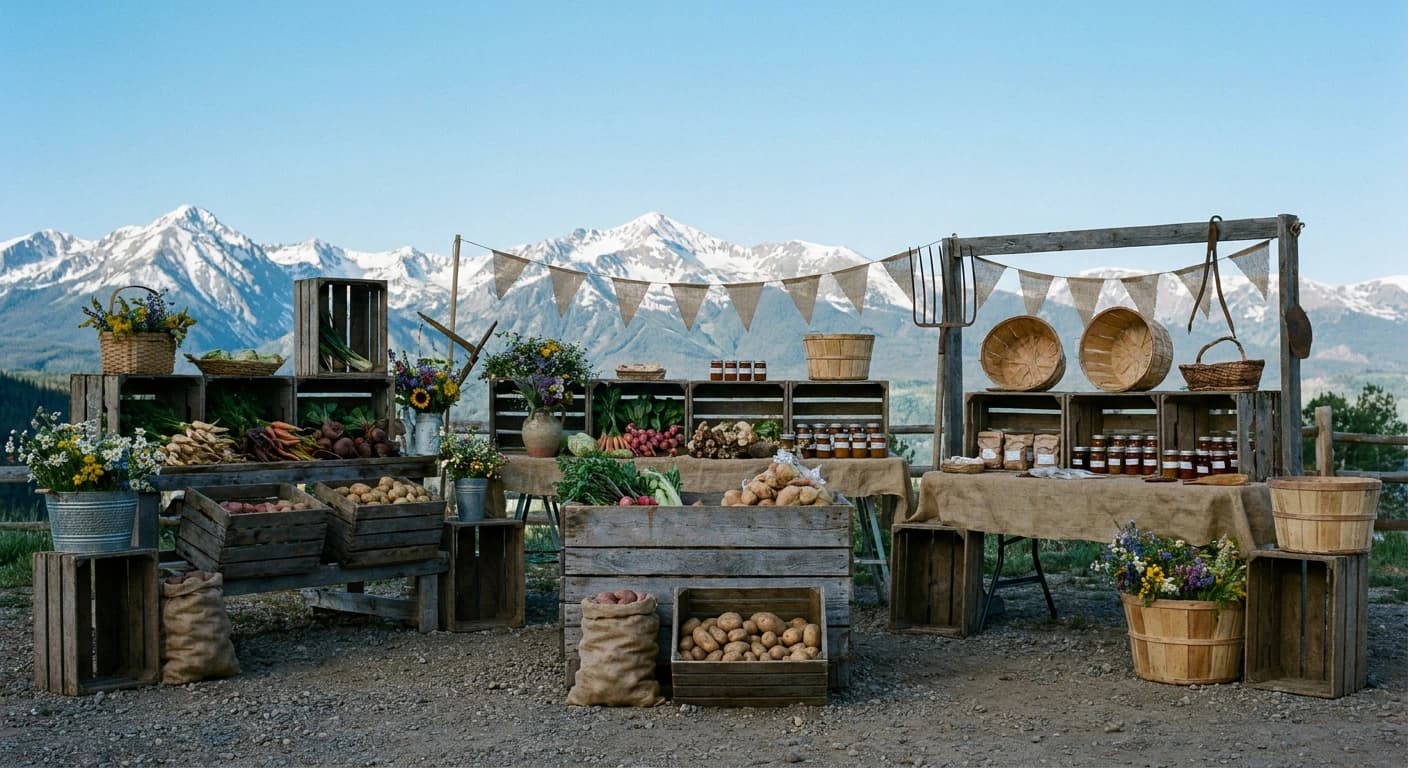
Where You Can Sell
- Permitted sales channel: Home Pickup
- Permitted sales channel: Farmers Markets
- Permitted sales channel: Roadside stands
- Permitted sales channel: Events & Fairs
- Permitted sales channel: Online Orders
- Not permitted sales channel: Interstate Sales
Yes, you can legally sell baked goods and other shelf-stable foods from your home kitchen in Colorado under the Colorado Cottage Foods Act (C.R.S. § 25-4-1614), enacted in 2012. Colorado's law requires no state permit, no registration, and no kitchen inspection — but it has one structural quirk that catches most home bakers off guard: the $10,000 annual cap applies per product, not to your total revenue.
Before your first sale you also need to complete an approved food safety training course. Once you have that certification and your labels are compliant, you can sell at farmers markets, from your home, at events, and via online orders with in-person pickup — but no shipping.
Is Cottage Food Legal in Colorado?
Yes. Cottage food production is legal in Colorado under the Colorado Cottage Foods Act, which the legislature enacted in 2012. The law allows home kitchen producers to sell non-potentially-hazardous foods directly to consumers without a state license, permit, or routine kitchen inspection.
Colorado's law is administered by the Colorado Department of Public Health and Environment (CDPHE). The two requirements before selling are a completed food safety training course and compliant product labels.
2026 legislative watch: House Bill 26-1033, known as the Tamale Act, is currently before Colorado lawmakers. If passed, it would eliminate the per-product sales cap and allow certain refrigerated and hot-held foods under the cottage food exemption. A nearly identical bill (HB 25-1190) died in committee in March 2025. Monitor the Colorado General Assembly website before making major business decisions that depend on the cap.
Contact the Colorado Department of Public Health and Environment with specific product eligibility or labeling questions before you start selling.
Next step
Start taking prepaid orders with Colorado-compliant labels
MyPorch helps Colorado bakers collect prepaid orders, generate Colorado-compliant labels, and keep weekly pickups and customer details organized.
Start your Colorado storefrontWhat Foods Can You Sell?
Colorado's Cottage Foods Act allows the sale of non-potentially-hazardous foods — foods that do not require refrigeration or hot holding for safety. Colorado's CDPHE website offers a five-question interactive eligibility checker; run any borderline product through it before printing labels.
✅ You Can Sell
- Breads, biscuits, rolls, muffins, and quick breads
- Cookies, brownies, bars, and shelf-stable cakes
- Fruit pies with shelf-stable fillings
- Candies, fudge, brittles, caramels, and chocolates
- Jams, jellies, preserves, and fruit butters
- Honey and flavored honey
- Dried herbs, spices, and seasoning blends
- Dehydrated fruits and vegetables
- Granolas and dry baking mixes
- Roasted coffee and dried tea blends
❌ You Cannot Sell
- Foods requiring refrigeration or hot holding for safety
- Cream-filled pastries, custard pies, and cheesecakes
- Foods with cream, custard, meringue, cut fruit, or cut vegetables as a filling or topping
- Meat or poultry products (including jerky)
- Whipped butter
- Hemp or hemp-derived products
- Condiments, sauces, and salsas
- Canned fruits or vegetables
- Beverages and juices
- Products not prepackaged and labeled for direct sale
| ✅ You Can Sell | ❌ You Cannot Sell |
|---|---|
| Breads, biscuits, rolls, muffins, and quick breads | Foods requiring refrigeration or hot holding for safety |
| Cookies, brownies, bars, and shelf-stable cakes | Cream-filled pastries, custard pies, and cheesecakes |
| Fruit pies with shelf-stable fillings | Foods with cream, custard, meringue, cut fruit, or cut vegetables as a filling or topping |
| Candies, fudge, brittles, caramels, and chocolates | Meat or poultry products (including jerky) |
| Jams, jellies, preserves, and fruit butters | Whipped butter |
| Honey and flavored honey | Hemp or hemp-derived products |
| Dried herbs, spices, and seasoning blends | Condiments, sauces, and salsas |
| Dehydrated fruits and vegetables | Canned fruits or vegetables |
| Granolas and dry baking mixes | Beverages and juices |
| Roasted coffee and dried tea blends | Products not prepackaged and labeled for direct sale |
In Colorado, cottage food producers may sell breads, cookies, shelf-stable cakes, candies, jams and jellies, honey, dried herbs, dehydrated fruits and vegetables, and granola, but not foods requiring refrigeration, cream-filled pastries, meat or poultry, condiments or salsas, canned vegetables, or beverages.
⚠ Watch out
Cream cheese frosting, fresh whipped cream toppings, and custard fillings are not permitted — they require refrigeration and make a product potentially hazardous. A standard shelf-stable American buttercream (butter, powdered sugar, vanilla) is generally fine; a cream cheese or whipped cream frosting is not.
⚠ Watch out
Salsas, pickles, and fermented or canned vegetable products are explicitly excluded from Colorado's cottage food exemption, regardless of pH or recipe. These carry a botulism risk if not processed in a licensed facility and are specifically listed as ineligible in the statute — not a gray area.
✓ Tip
Use CDPHE's five-question eligibility checker at cdphe.colorado.gov/dehs/cottage-foods for any product you are unsure about. The checker maps to the statute's exact eligibility criteria.
In summary, Colorado cottage food producers may sell non-potentially-hazardous shelf-stable foods that do not require refrigeration or hot holding for safety, while foods requiring temperature control — including cream-filled pastries, salsas, canned vegetables, and beverages — are explicitly excluded.
Annual Revenue Cap and Sales Channels
Colorado limits cottage food operators to direct-to-consumer sales channels and imposes an annual net revenue cap of $10,000 per individual product.
The Per-Product Sales Cap
Colorado's $10,000 annual cap is per product, not total. This is one of the most misunderstood aspects of the law and the most consequential for bakers building diverse menus.
What this means in practice:
- Your sourdough loaf can earn up to $10,000 net revenue in 2026
- Your chocolate chip cookies can earn up to $10,000 net revenue in 2026
- Your lemon bars can earn up to $10,000 net revenue in 2026
A baker selling six distinct products could generate up to $60,000 in annual net revenue — as long as no single product exceeds $10,000. Conversely, a baker whose one hero product sells out quickly may hit the ceiling well before year-end.
Each flavor or variety is generally treated as a separate product with its own $10,000 ceiling. Your plain sourdough and your jalapeño cheddar sourdough are two distinct products — each with its own cap.
The cap is measured in net revenue, not gross sales. Keep records of revenue and direct costs per product to track your position throughout the year.
⚠ Watch out
If an individual product crosses the $10,000 net threshold, you must stop selling that specific product for the remainder of the calendar year, or move its production to a licensed commercial kitchen for the rest of the year.
Sales Channels
Colorado requires all cottage food sales to be direct-to-consumer. The product must be prepackaged and properly labeled at the time of sale.
Permitted sales channels:
- Home sales and porch pickup — selling directly to consumers at your residence
- Farmers markets — one of the primary channels for Colorado cottage food producers
- Community events, craft fairs, and roadside stands — direct-to-consumer sales at temporary venues
- Online ordering with in-person pickup or local delivery — you may take orders and payment online, but the product must be handed to the buyer in person within Colorado
What is not permitted:
- Shipping: Colorado's cottage food exemption requires in-person delivery. You cannot mail or ship products via USPS, UPS, FedEx, or any carrier.
- Retail or grocery store placement: Consignment, wholesale, and retail-shelf sales are not allowed.
- Restaurant and institutional sales: You may not sell to restaurants, cafes, caterers, schools, hospitals, or similar institutions.
- Resale: The required label disclaimer explicitly states "This product is not intended for resale."
In summary, Colorado cottage food producers are limited to $10,000 net revenue per product per year across direct-to-consumer channels only — farmers markets, home sales, events, and online ordering with in-person delivery — with no shipping, wholesale, or retail placement permitted.
Permit, Registration, and Training Requirements
Colorado requires no state permit, license, or kitchen inspection to sell cottage foods, but you must complete an approved food safety training course before your first sale.
No Permit or Registration Required
Colorado does not require a state permit, license, or registration to operate a cottage food business. You do not need to notify CDPHE, apply to a county health department, or pay any fees before selling.
Food Safety Training — Required Before Selling
The one formal requirement before your first sale is a completed food safety training course. Colorado offers two approved pathways:
Option 1 — CSU Extension Course (most common)
The Colorado State University Extension "Food Safety Training for Colorado Cottage Food Producers" is specifically approved under the Act. This is the most widely used path, with over 2,020 producers certified since the law passed.
- Format: In-person, classroom-style training
- Certificate validity: 3 years from the date of completion
- Renewal: You must stay current with course renewal requirements
- Contact your local CSU Extension office or visit extension.colostate.edu to find upcoming sessions
Option 2 — Food Handler Card
Colorado also accepts a valid Food Handler Card from an ANSI-accredited food handler program. Food Handler Cards are available through local health departments and various approved training providers.
No Kitchen Inspection
Colorado does not conduct routine inspections of home kitchens for cottage food operations. Your home kitchen is exempt from state licensure and routine inspection as long as you operate within the law's limits.
In summary, Colorado cottage food producers need no state permit, registration, or kitchen inspection, but must complete an approved food safety training course — either the CSU Extension cottage food course (valid 3 years) or a Food Handler Card from an ANSI-accredited provider — before their first sale.
Label Requirements for Colorado Cottage Food
Every Colorado cottage food product must be prepackaged and labeled before sale. Colorado also requires a separate placard displayed at your point of sale — a requirement many bakers overlook.
Required label elements:
- Product name — the common name of the food
- Ingredient list in descending order by weight — all ingredients and sub-ingredients
- Net weight or volume — stated in both US and metric units (e.g., Net Wt. 16 oz / 454g)
- Business name and full physical street address — your full street address, city, state, and ZIP. P.O. boxes are not accepted
- Major allergen declaration — declare milk, eggs, fish, crustacean shellfish, tree nuts, peanuts, wheat, soy, and sesame when present
- Required disclaimer — verbatim, on every label:
This product was produced in a home kitchen that is not subject to state licensure or inspection and that may also process common food allergens such as tree nuts, peanuts, eggs, soy, wheat, milk, fish, and crustacean shellfish. This product is not intended for resale.
Placard at point of sale (separate from label)
At every sales location — farmers market booth, home sales table, event — you must display a visible placard, sign, or card:
This product was produced in a home kitchen that is not subject to state licensure or inspection.
Keep a laminated copy in your market kit. The placard is a separate statutory requirement from the label, and it applies at every venue where you sell.
REQUIRED vs. RECOMMENDED
| Element | Required by Colorado Law | Recommended Best Practice |
|---|---|---|
| Product name | ✅ Required | Use the common name customers recognize |
| Ingredient list (descending by weight) | ✅ Required | Include sub-ingredients for all compound items |
| Net weight or volume | ✅ Required | State in both oz and grams (e.g., 16 oz / 454g) |
| Business name and full street address | ✅ Required | P.O. box not accepted — full street address only |
| Major allergen declaration | ✅ Required when applicable | Use a bold "Contains:" statement near the ingredient list |
| Required label disclaimer | ✅ Required | Copy verbatim — do not paraphrase |
| Point-of-sale placard | ✅ Required at every sales location | Laminate and keep in your market kit |
| Production or bake date | Not required | ✅ Recommended — aids traceability and customer trust |
| Best-by or use-by date | Not required | ✅ Recommended for short shelf-life items |
| Storage instructions | Not required | ✅ Recommended for humidity-sensitive items |
| QR code linking to storefront | Not required | ✅ Drives repeat orders at markets |
| Nutrition facts panel | Not required | Omit unless making a nutrient claim |
Colorado law requires 7 label elements: product name, ingredient list in descending order by weight, net weight or volume in US and metric units, business name and full physical street address, major allergen declaration, the required label disclaimer, and a point-of-sale placard at every sales location.
Common labeling mistakes Colorado bakers make:
- Using a P.O. box instead of a full street address
- Paraphrasing the disclaimer instead of copying it verbatim
- Forgetting the point-of-sale placard at markets and events
- Omitting metric units from the net weight (both US and metric required)
- Listing "chocolate chips" without unpacking the sub-ingredients
- Forgetting sesame — it became a federally recognized major allergen in January 2023
For broader label layout guidance and allergen phrasing examples, see the cottage food labeling requirements guide.
In summary, Colorado cottage food producers must label every product with the product name, full ingredient list in descending weight order, net weight in both US and metric units, a full physical street address (no P.O. boxes), allergen declarations, and the verbatim required disclaimer — plus a separate point-of-sale placard at every sales location.
Now That You Know the Rules — Here's How to Start Selling
Colorado's cottage food law is fast to enter — no permit, no registration, no inspection. Get these four things right before your first sale:
- Complete food safety training. Register for the next CSU Extension cottage food course in your area, or obtain a Food Handler Card from your local health department. Keep your certificate current.
- Confirm your product list. Run each product through CDPHE's five-question eligibility checker. Contact CDPHE before selling anything borderline — infused honey, flavored vinegar, freeze-dried fruit.
- Build your labels and placard. Every label needs your product name, full ingredient list with sub-ingredients, net weight in US and metric, full street address, allergen declarations, and the verbatim disclaimer. Make a laminated placard for every sales venue. MyPorch can help draft your Colorado label with the full disclaimer pre-populated — verify against current CDPHE requirements before printing.
- Track revenue per product from day one. The per-product cap means you need to know how much each item has earned, not just your total. A spreadsheet tracking units × price per product, updated after each market or sales period, is enough to stay compliant. Be sure to price your items correctly from the start to cover your costs and protect your margins. Check out the complete pricing guide for cottage bakers →.
- Set up pre-orders before your first batch. Online pre-orders are allowed as long as pickup or delivery is in person within Colorado. A system that takes payment upfront, locks your order count before bake day, and keeps customer records eliminates the chaos of DMs and Venmo requests. Read how to take pre-orders for your home bakery →, then start your free MyPorch storefront → — take orders online, generate a master bake list when your cutoff hits, and print state-compliant labels directly from your product data.
Summary
Key Takeaways — Colorado Cottage Food Law
- Colorado requires no state permit or registration to sell cottage food — but you must complete an approved food safety training course before your first sale.
- The sales cap is $10,000 net revenue per product per year — not a total cap. Each distinct product (and each flavor or variety) has its own $10,000 ceiling.
- Sales must be direct-to-consumer with in-person delivery — online ordering is permitted, but shipping is not. Farmers markets, home sales, and events are the primary channels.
- Every Colorado cottage food label must display a full physical street address (P.O. boxes are not accepted) and the exact required disclaimer, in US and metric net weight.
- A second Tamale Act bill (HB 26-1033) is pending in 2026 and would eliminate the sales cap and allow certain refrigerated foods — check for updates before scaling.
Frequently Asked Questions
Find answers to the most common questions about Colorado's cottage food regulations, allowed foods, labeling requirements, and sales caps.
Do I have to collect sales tax on cottage food in Colorado?
How much does it cost to get a cottage food license in Colorado?
Do I need a permit or license to sell cottage food in Colorado?
Is registration required for cottage food operations in Colorado?
Is food safety training required to sell cottage food in Colorado?
What kind of food safety training is required?
How often do I need to renew my food safety training?
Does my home kitchen need to be inspected to sell cottage food in Colorado?
What types of food can I sell under the Colorado Cottage Food Act?
Can I sell baked goods with cream cheese frosting?
Can I sell jams and jellies under the Colorado cottage food law?
Can I sell salsa under the Colorado Cottage Food Act?
Can I sell beverages or juices?
Can I sell pet treats under the Colorado Cottage Food Act?
Can I use a handwritten label for my cottage food products?
Do I need a business license to operate a cottage food business in Colorado?
How does the per-product sales cap work in Colorado?
What counts as a separate "product" for the per-product cap?
Does the per-product cap apply to each flavor or variety?
What counts as "net revenue" under the Colorado Cottage Food Act?
What happens if I exceed the $10,000 cap for a product?
How do I track my sales to comply with the per-product limit?
Where can I sell cottage food products in Colorado?
Can I sell cottage food online in Colorado?
Is shipping allowed for cottage food products in Colorado?
Can I sell cottage food at a farmers market in Colorado?
Can I accept pre-orders for my cottage food products?
Can I sell to restaurants, grocery stores, or cafes?
What information is required on a Colorado cottage food label?
Does the Colorado cottage food law require a specific disclaimer on labels?
What is the point-of-sale placard requirement?
Do I need to include a production date on my cottage food label in Colorado?
Does Colorado require a full street address on the label?
Can I advertise my cottage food business online?
What allergen labeling is required for Colorado cottage food products?
Are there any local regulations that affect cottage food businesses in Colorado?
What is the Tamale Act and how might it affect my cottage food business?
Recent Law Changes
Colorado's cottage food law has evolved steadily since its enactment in 2012, with recent legislative efforts focusing on cap limits and allowed food items.
2026 — HB 26-1033 (Tamale Act 2026, Pending)
A second version of the Tamale Act is under consideration in the 2026 legislative session. If passed, it would amend the Colorado Cottage Foods Act to allow certain refrigerated and hot-held foods including meat-based dishes, and eliminate the $10,000 per-product annual sales cap. The bill had not been enacted as of the date this guide was last reviewed — verify current status at leg.colorado.gov before making business decisions that depend on its passage.
March 2025 — HB 25-1190 (Tamale Act 2025, Failed)
House Bill 25-1190 aimed to expand allowed foods and remove the per-product sales cap, but was postponed indefinitely by the House Committee on Agriculture, Water & Natural Resources on March 3, 2025.
March 2024 — FDA 2022 Model Food Code Adopted
Colorado adopted the FDA 2022 Model Food Code for retail food establishments, effective March 16, 2024. Key changes for licensed commercial operations include mandatory allergen notification at point of service and integration of sesame as the ninth major allergen. These changes affect licensed food establishments, not home-based cottage food producers.
2012 — Colorado Cottage Foods Act Enacted
The Colorado Cottage Foods Act was signed into law in 2012, establishing the no-permit, training-required, per-product-capped framework that remains in effect today.
_This guide was last reviewed May 25, 2026. Colorado cottage food law should be verified against the official sources listed above before making compliance decisions. The pending HB 26-1033 legislation could materially change the rules — confirm current law status with CDPHE before your first sale._
How Colorado Compares
Colorado vs. Similar States
Key metrics across states with similar baker populations.
| State | Annual Cap | Wholesale | Online Sales | Inspection |
|---|---|---|---|---|
| ColoradoThis guide | $10K | No | Yes | No |
| Arizona | None | Yes | Yes | No |
| Kansas | None | No | Yes | No |
| Nebraska | None | No | Yes | No |
| New Mexico | None | No | Yes | No |