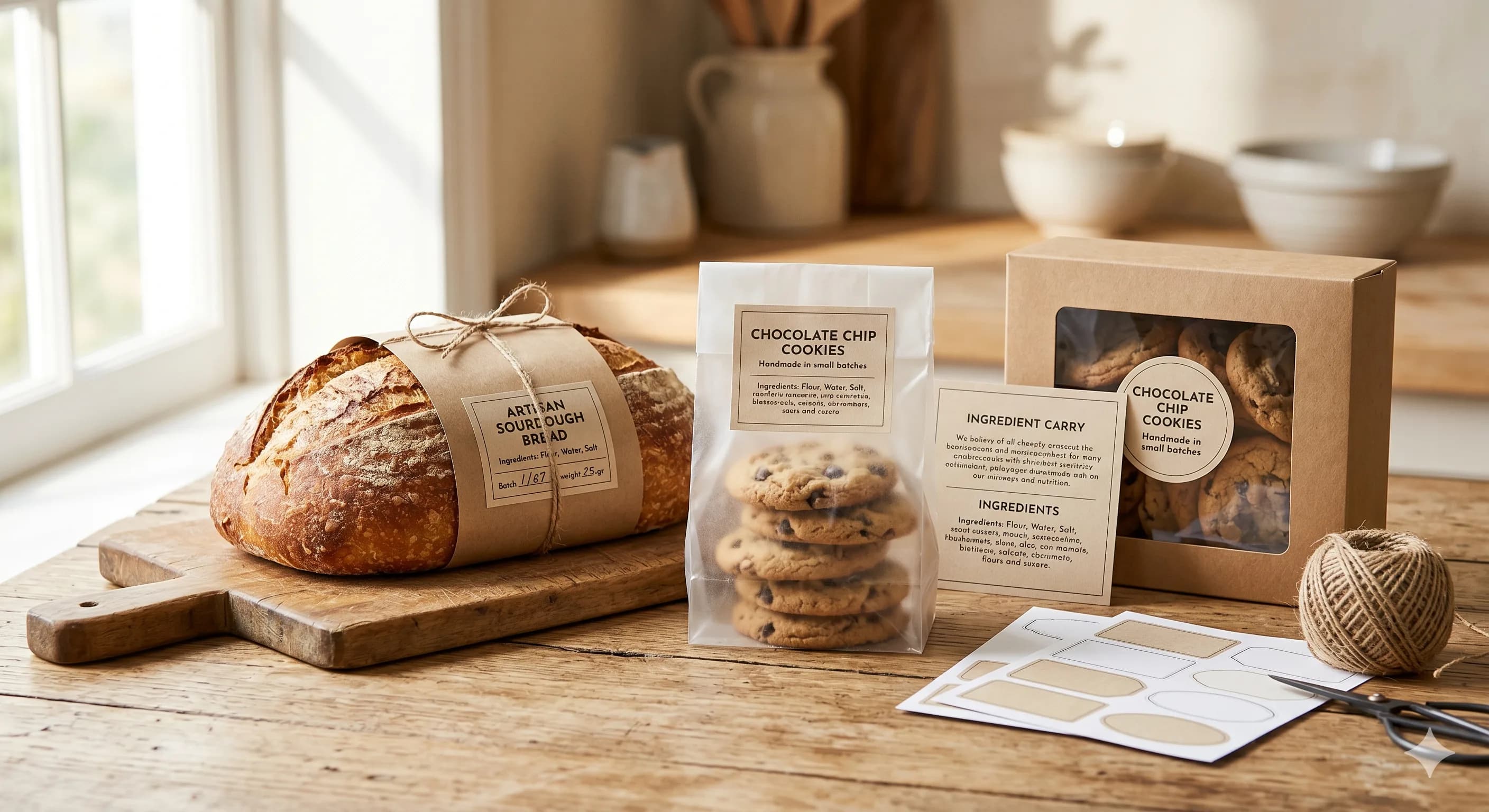
If you sell baked goods under a cottage food law, your label is more than packaging. It is the small piece of paper that tells a customer what they are buying, who made it, what is inside it, and which cottage food rules apply. This cottage food label checklist covers the common label elements most home bakers need to review before selling. It is not a substitute for your state rules, but it gives you a reliable starting point before you print. For a deeper walkthrough of every required element and how to keep labels accurate over time, see the complete cottage food labeling requirements guide.
Cottage food laws can change, and label requirements vary by state. Always confirm your requirements with your state or local regulator before selling. Not sure whether selling from home is legal in your state? Every U.S. state has a cottage food law — the rules just differ significantly.
Quick Cottage Food Label Checklist
Before you print a label, confirm that it includes:
- Product name
- Business or baker name
- Required address or location information
- Ingredients in descending order by weight
- Major food allergens
- Net weight or quantity
- Required cottage food disclaimer, if your state requires one
- Permit or registration number, if your state requires one
- Date made or batch date, if your state requires it
What Goes on a Cottage Food Label?
Most cottage food labels answer five basic questions:
| Question | Label element |
|---|---|
| What is this product? | Product name |
| Who made it? | Baker or business name |
| What is inside it? | Ingredients and allergens |
| How much is included? | Net weight or quantity |
| What legal notice applies? | Cottage food disclaimer or permit details |
The exact wording depends on your state, but the goal is the same everywhere: make the product clear, traceable, and honest.
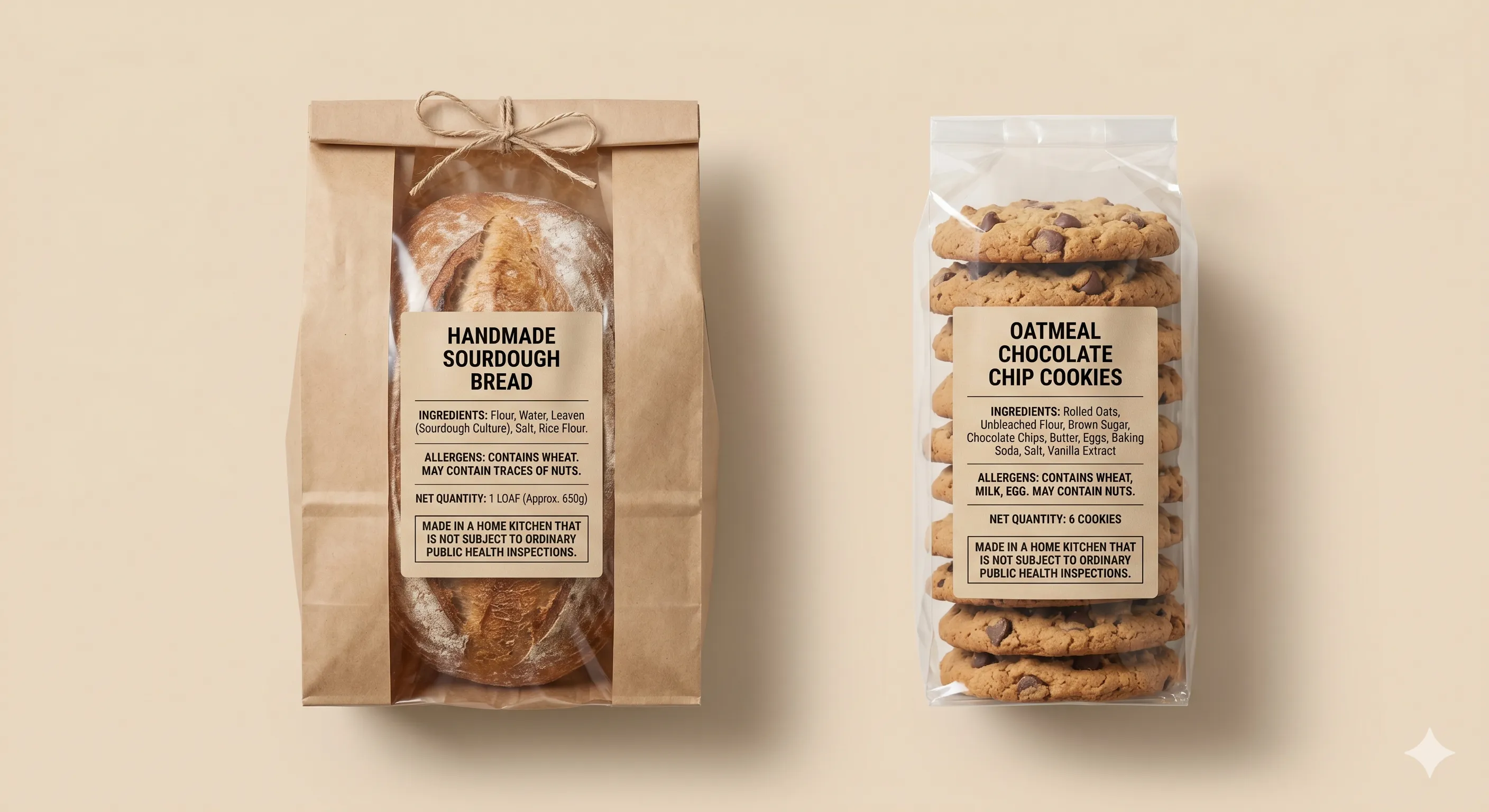
Product Name
Use a plain product name that a customer can understand without extra context. "Chocolate chip cookies" is better than "Saturday box" if the label will be attached to a packaged item.
If your product has a flavor or variation, include it in the product name:
- Classic sourdough loaf
- Cinnamon brown sugar scones
- Gluten-free peanut butter cookies
Avoid names that hide important product details. If the item includes a major allergen or uncommon ingredient, make sure that information appears clearly in the ingredients and allergen sections.
Ingredients
Ingredients are usually listed in descending order by weight. That means the ingredient used in the largest amount comes first.
For a simple sourdough loaf, a basic ingredient list might look like:
Ingredients: wheat flour, water, sourdough starter, salt.
For cookies, cakes, quick breads, and decorated goods, the list can get longer quickly. Do not rely on memory if you use mixes, fillings, toppings, or decorations. Pull the ingredient details from your recipe and from any packaged ingredients you used.
Major Allergens
In the United States, the major food allergens include milk, eggs, fish, crustacean shellfish, tree nuts, peanuts, wheat, soybeans, and sesame.
Many cottage food bakers include allergens in a short "Contains" statement after the ingredient list:
Contains: wheat, milk, eggs.
If you bake with nuts, sesame, dairy, or gluten in the same kitchen, check whether your state requires any cross-contact language. Even when it is not required, clear allergen communication builds customer trust.
Business Name and Address
Most states require some form of maker identification, but address rules vary. Some states require a full business address. Others allow a city/state, permit number, or alternate contact method.
Do not guess here. This is one of the details that changes meaningfully by state.
Required Cottage Food Disclaimer
Many states require exact disclaimer language explaining that the product was made in a home kitchen or cottage food operation. The exact wording matters.
For example, one state might require language about a home kitchen not being inspected, while another might require a different statement tied to a specific cottage food law.
Copy disclaimer language from an official source, not from a random label image online.
Net Weight or Quantity
Your label should tell the customer how much product they are receiving. Depending on the product, that may be:
- Net weight
- Count, such as 6 cookies
- Volume
- Package size
For baked goods sold by the piece, quantity may be clearer than weight. For packaged items like granola or brittle, weight is usually more natural.
Before You Print
Use this final review before printing a batch of labels:
- Confirm the product name matches the item being sold.
- Compare the ingredient list to the current recipe.
- Check allergen language.
- Confirm the state disclaimer is current.
- Confirm address, permit, or registration requirements.
- Check spelling, dates, and net weight.
- Save a copy of the label used for that batch.
The Practical Problem
The tricky part is not making one label. The tricky part is keeping labels accurate as your recipes, batches, and state requirements change. If you are also setting up your order system, the pre-order guide for home bakers covers how labels connect to bake lists and customer orders.
That is why MyPorch treats labels as part of the order workflow. Products, ingredients, allergens, batches, and paid orders all need to line up before you print.