
Where You Can Sell
- Permitted sales channel: Home Pickup
- Permitted sales channel: Wholesale
- Permitted sales channel: Farmers Markets
- Permitted sales channel: Home Pickup
- Permitted sales channel: Online Orders
- Not permitted sales channel: Interstate Sales
Yes, you can legally sell certain baked goods and other shelf-stable foods from your home kitchen in New York under the Home Processor Exemption.
New York is one of the more flexible states in the country for serious home bakers. The official Department of Agriculture and Markets page allows wholesale and retail sales, internet sales within New York State, and a broad list of approved shelf-stable products. It also currently shows no registration fee and no published sales cap for registered home processors.
That flexibility comes with a few rules that are easy to miss:
- you must register with the state before selling
- you must get local zoning approval before you start
- all products must be prepackaged at home
- all sales must stay within New York State
Current New York official materials, especially the Department's home processing page and registration form, are the best place to resolve product-list and labeling questions. Older third-party summaries often overstate what is allowed, so it is worth leaning on the official reading when details conflict.
Can I Sell Food From Home in New York?
New York permits certain home-kitchen food businesses through the Home Processor Exemption under 1 NYCRR 276.4 and the Department of Agriculture and Markets' current home-processing guidance.
If you qualify, you are exempt from the Article 20-C food processing establishment license. But "exempt from licensing" does not mean "no steps required." New York still expects:
- a Home Processor Registration request
- local zoning approval before commencing operations
- water-test results if you use a private well
- compliant labels on prepackaged goods
New York also gives home processors something many states do not: the ability to sell not only retail, but also wholesale to local establishments within the state.
What You Can and Cannot Sell
New York limits the exemption to approved non-potentially hazardous foods and product types that the Department has specifically greenlit.
New York's Home Processor Exemption defines eligible products as non-potentially hazardous foods — foods that do not require time or temperature control for safety — produced in a private home kitchen and prepackaged before sale.
✅ You Can Sell
- Breads, rolls, cinnamon rolls, biscuits, bagels, muffins
- Doughnuts without cream fillings
- Cookies, baklava, biscotti
- Cakes, cupcakes, brownies, scones _(subject to the no-homemade-buttercream limitation)_
- Double-crust fruit pies
- High-acid fruit jams, jellies, and marmalades
- Repacked or blended commercially dried spices or herbs
- Repackaged dried vegetables, dried soup mixes, roasted coffee beans/grounds, dried fruit
- Repackaged dried pasta, dry baking mixes, seasoning salt
- Fudge, popcorn/caramel corn, peanut brittle, Rice Krispies treats, granola, granola bars
- Repacked non-chocolate candy, waffle cones, pizzelle, toffee/caramel apples, crackers
- Pretzels, sugar confections, vegetable chips, pet treats under separate registration rules
❌ You Cannot Sell
- Homemade buttercream or cream cheese frosting containing dairy or eggs
- Cheesecake, cream-filled pastries, cream pies, meringue pies
- Foods that require refrigeration for safety
- Pickles, relishes, jalapenos, sauerkraut
- Sauces, salsas, marinades, mustards, ketchups, vinegars
- Pepper jellies, wine jellies, vegetable jellies, chutneys, fruit syrups
- Cooked or canned fruits or vegetables
- Beverages
- Roasting or grinding coffee beans at home
- Fresh pasta, nut butters, freeze-dried foods, compotes, spreads, quiche
- Tempered chocolate or candy melts for dipping/coating/drizzling
- Any products containing raw nuts, meat, fish, poultry, or fluid dairy products
| ✅ You Can Sell | ❌ You Cannot Sell |
|---|---|
| Breads, rolls, cinnamon rolls, biscuits, bagels, muffins | Homemade buttercream or cream cheese frosting containing dairy or eggs |
| Doughnuts without cream fillings | Cheesecake, cream-filled pastries, cream pies, meringue pies |
| Cookies, baklava, biscotti | Foods that require refrigeration for safety |
| Cakes, cupcakes, brownies, scones _(subject to the no-homemade-buttercream limitation)_ | Pickles, relishes, jalapenos, sauerkraut |
| Double-crust fruit pies | Sauces, salsas, marinades, mustards, ketchups, vinegars |
| High-acid fruit jams, jellies, and marmalades | Pepper jellies, wine jellies, vegetable jellies, chutneys, fruit syrups |
| Repacked or blended commercially dried spices or herbs | Cooked or canned fruits or vegetables |
| Repackaged dried vegetables, dried soup mixes, roasted coffee beans/grounds, dried fruit | Beverages |
| Repackaged dried pasta, dry baking mixes, seasoning salt | Roasting or grinding coffee beans at home |
| Fudge, popcorn/caramel corn, peanut brittle, Rice Krispies treats, granola, granola bars | Fresh pasta, nut butters, freeze-dried foods, compotes, spreads, quiche |
| Repacked non-chocolate candy, waffle cones, pizzelle, toffee/caramel apples, crackers | Tempered chocolate or candy melts for dipping/coating/drizzling |
| Pretzels, sugar confections, vegetable chips, pet treats under separate registration rules | Any products containing raw nuts, meat, fish, poultry, or fluid dairy products |
In New York, home processors may sell breads, cookies, cakes, double-crust fruit pies, jams and jellies, fudge, granola, and repackaged dry goods, but not homemade buttercream or cream cheese frosting, cheesecake, cream-filled pastries, pickles, sauces, salsas, or beverages.
⚠ Watch out
New York's Approved-Products List Is More Specific Than Many State Guides Suggest The official page does not just say "shelf-stable baked goods." It lists approved categories and product limitations in detail. That means foods like honey, fresh pasta, beverages, or homemade buttercream should not be casually assumed to fit under the standard Home Processor Exemption.
Two Product Nuances Bakers Commonly Miss
New York's official page is unusually specific, and that matters.
First, some products are allowed only in repacked form rather than home-manufactured form. The Department allows:
- repackaging roasted coffee beans or grounds, but not roasting or grinding the beans
- repackaging dried pasta, but not manufacturing and drying pasta at home
- repackaging dried fruit and dried vegetables, but not home-drying them under this exemption
Second, some items that many bakers assume are fine are still prohibited because of either moisture risk or the absence of a meaningful pathogen-kill/control step.
✓ Tip
Start With the Safest New York First Menu If you want the least ambiguous first launch, start with products like cookies, brownies, breads, bagels, biscotti, double-crust fruit pies, dry mixes, fudge, popcorn, and granola bars. Those categories sit closest to the center of New York's approved list.
Honey Is a Separate New York Exemption
This is one of the places where third-party state guides often blur categories.
New York does have an exemption for maple syrup and honey processing, but it sits on a separate official page with its own conditions. So if you are a baker who also bottles your own honey, do not assume the honey is covered by the same home-processor product list as your cookies and bread. Treat honey as a separate compliance lane and use the maple/honey page as your source.
In summary, New York home processors may only sell non-potentially hazardous foods from a specific Department-approved list — including baked goods, jams, fudge, popcorn, and certain repackaged goods — with products like homemade buttercream, cream-filled pastries, acidified foods, and beverages explicitly prohibited.
Next step
Start taking prepaid orders with New York-compliant labels
MyPorch helps New York bakers collect prepaid orders, generate New York-compliant labels, and keep weekly pickups and customer details organized.
Start your New York storefrontNo Published Sales Cap, Wholesale Allowed, and In-State Internet Sales
New York's current official materials do not publish an annual gross-sales cap for registered home processors.
That is one of the biggest structural advantages of the New York framework. The Department's page focuses on the approved products, registration, and sales-channel limits rather than on any annual revenue ceiling.
Where You Can Sell
The official New York home-processing page says home processors may market products at wholesale and/or retail, including:
- farms and farm stands
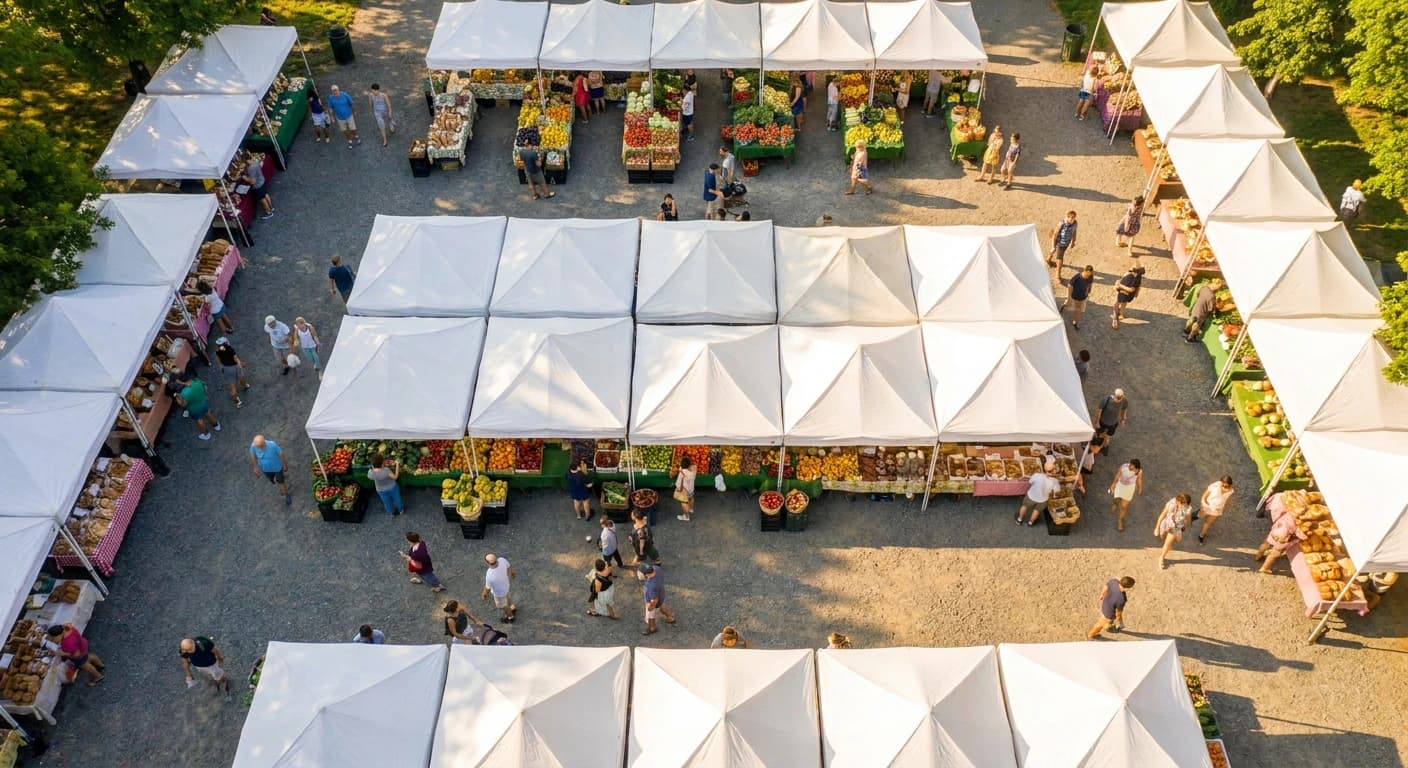
- farmers markets and green markets
- craft fairs and flea markets
- home delivery
- internet sales
The FAQ on the same page also explicitly says home processors may sell items wholesale to local facilities such as restaurants, cafés, and grocery stores, as long as those facilities are within New York State.
That makes New York materially more flexible than many other states that stop at direct-to-consumer sales only.
Wholesale Really Is Part of the Current Official Framework
For a baker, this means New York's system can support more than porch pickup.
You can potentially:
- run direct preorder pickups
- attend markets
- sell online for in-state customers
- add a local café or retailer account
All of that can happen under the home-processor framework, as long as the products themselves are approved, prepackaged, labeled correctly, and sold within the state.
ℹ Note
New York's Advantage Is Channel Flexibility In many states, "home bakery" still means direct retail only. New York's official guidance is broader: retail and wholesale are both on the table, which gives bakers a real path from weekend pickups to recurring local accounts.
The Limits That Still Matter
New York is permissive, but not unlimited.
The current official page is clear that:
- all products must be sold within New York State
- all items must be prepackaged in the home
- packaging food at the agricultural event itself is not permitted
That means the friendly-looking market stall still needs back-end discipline. Your cookies need to be packed and labeled before you leave home. You are not supposed to be filling bags or boxing food at the market in real time under this exemption.
⚠ Watch out
Prepackaged at Home Means Prepackaged at Home New York's official page specifically says packaging food items at an agricultural event is not permitted. If your sales model depends on bagging or boxing products at the booth, change the workflow before launch.
Shipping and Interstate Sales
New York allows internet sales, and the FAQ says shipping products out of state is not permitted. So the safe reading is:
- online orders inside New York: yes
- home delivery inside New York: yes
- shipping inside New York: yes
- interstate shipping: no
If you want to sell outside New York, you are no longer in the comfortable home-processor lane.
In summary, New York home processors operate without a published annual sales cap and may sell through retail, wholesale to local establishments, farmers markets, home delivery, and in-state internet sales — with all products required to be prepackaged at home and all sales confined to within New York State.
Registration, Zoning, Water Testing, and Inspection
New York requires a real state step before your first sale: Home Processor Registration.
Free Registration Required Before Selling
The current registration form is explicitly titled Home Processor Registration Request, and the official page says there is currently no fee associated with that registration.
The page also says:
- the registration is location specific
- if you move, you must reapply
- if you want to add products, you submit the form again as a supplemental registration
- the registration does not currently have an expiration date
That last point is worth calling out because many state programs require annual renewal. New York's current page says this one does not.
Local Zoning Approval Is Required
This is one of the most important lines on the official page, and a lot of summaries underplay it.
New York tells applicants to consult with local zoning officials for approval before commencing any home-based business. That means the state registration is not the whole story. Your town, city, or municipality still matters.
The practical result:
- do not spend on packaging, signage, or a market season before checking zoning
- if you live in a denser municipality or a building with stricter use rules, confirm early
Private Well Requirements
If your home uses a private well, the official FAQ says you must submit:
- an acceptable water analysis
- for Total coliforms
- from a certified laboratory
The registration form also says the analysis must be recent and no more than three months old when submitted.
Complaint-Basis Inspection, Not Routine Inspection
The official FAQ says kitchens are reviewed on a complaint basis only. That is a meaningful distinction.
New York does not present this as a scheduled annual kitchen-inspection program for home processors. But if there is a complaint, the Department can investigate.
One Important Disqualifier
The FAQ also says the Home Processor Exemption is not available to anyone who already holds:
- a Department of Health permit, or
- a Department of Agriculture and Markets license
And the main page says the home-processor registration becomes null and void if you open a food business inspected or licensed by those agencies. In that case, all food has to be manufactured in the commercial facility.
⚠ Watch out
You Cannot Run Both Models Interchangeably If you move into a separately licensed or permitted food business, New York says the home-processor registration becomes null and void. At that point, production needs to shift into the licensed facility.
In summary, New York home processors must obtain a free state registration and local zoning approval before selling, with private-well users also required to submit certified water-test results — no food handler training is required and no routine kitchen inspection applies.
New York Home Processor Labeling Requirements
Every home-processed product sold in New York must be properly labeled, and New York is fairly specific about what that means.
Required Label Elements
The registration request form says labels are required to contain:
- the common or usual name of the product
- the ingredient list in predominance by weight
- the net quantity of contents
- the processor name and full address
The sample label and FAQ on the official page add two other practical requirements:
- allergen labeling
- a home-processor identifier statement
The Home-Processor Identifier
The official page gives accepted examples such as:
Made at Home by [Name]
or
Made in a Home Kitchen
And the page says this statement must appear in at least 1/16-inch font.
That is important because New York does not frame this as one long unique legal disclaimer the way some other states do. It is more of a required identifier statement, with accepted formulations shown in the official guidance.
Address Rule: Street Address or PO Box
The current FAQ says the place of business must include:
- the street address or PO Box
- city
- state
- ZIP code
That is a meaningful correction from many simplified summaries that say only a home street address is acceptable.
REQUIRED vs. RECOMMENDED Label Elements
| Element | Required by NY Guidance | Recommended Best Practice |
|---|---|---|
| Processor name | ✅ Required | Use your trade name too if you sell under one |
| Street address or PO box, city, state, ZIP | ✅ Required | Keep the formatting consistent across labels |
| Product name | ✅ Required | — |
| Ingredients list (by weight) | ✅ Required | — |
| Net quantity | ✅ Required | — |
| Major allergen statement | ✅ Required in practice | — |
| Home-processor identifier | ✅ Required | Keep at least 1/16-inch font |
| Registration number | Not required | — |
| Production / bake date | Not required | ✅ Strongly recommended |
| Best-by or use-by date | Not required | ✅ Recommended |
| QR code linking to ordering page | Not required | ✅ Helpful for repeat business |
| Storage instructions | Not required | ✅ Useful for fragile or humidity-sensitive items |
New York law requires 7 label elements: processor name, street address or PO box with city, state, and ZIP, product name, ingredients list by weight, net quantity, major allergen statement, and a home-processor identifier such as "Made at Home by [Name]" in at least 1/16-inch font.
⚠ Watch out
The Font-Size Rule Is Easy to Miss The official page calls for the home-processor identifier to appear in at least 1/16-inch font. That seems tiny, but if you use very compressed label templates, it is easy to drift under the threshold without noticing.
Common Labeling Mistakes New York Bakers Make
- leaving off the home-processor identifier entirely
- shrinking the identifier below 1/16-inch type
- using only a business name and forgetting the mailing address details
- forgetting that a PO box is allowed, but city/state/ZIP still need to appear
- listing ingredients out of order
- forgetting sesame in allergen handling
✓ Tip
Build the Market Label Before You Build the Market Booth In New York, labels do more than satisfy the law. They are what make prepackaged-at-home sales workable at markets, deliveries, and wholesale accounts. Get the label workflow stable before you add more channels.
MyPorch can help you organize product names, ingredients, allergens, and net quantity details for New York-compliant labels, and New York is one of the states where app rule support is already implemented. Start a free MyPorch storefront →
In summary, New York home processors must include a home-processor identifier such as "Made at Home by [Name]" or "Made in a Home Kitchen" in at least 1/16-inch font on every label, alongside the product name, ingredient list by weight, net quantity, processor name and address, and allergen information.
Now That You Know the Rules — Here's How to Start Selling
New York gives you more room to grow than most home-bakery frameworks do. But that freedom can create operational chaos if you add too many channels too fast.
Before you pitch a café or book three markets, use the home bakery pricing guide so your product pricing reflects ingredients, packaging, labor, and delivery time.
A practical sequence looks like this:
- Submit your Home Processor Registration Request. This is free and required.
- Confirm local zoning approval. Do not skip this step just because the state registration looks straightforward.
- Handle well-water testing if it applies to you. If you use a private well, line up acceptable certified-lab test results before launch.
- Choose products from the clearly approved list first. Cookies, brownies, breads, bagels, biscotti, double-crust fruit pies, fudge, popcorn, and similar staples are the easiest starting point.
- Build labels that work across every channel and prepackage at home. Since New York allows direct, market, internet, and wholesale sales, your label system should be ready for all of them from the start. Use the cottage food labeling guide as your checklist before printing.
- Start with direct sales, delivery, or markets, then add wholesale second. Direct preorders and markets help you tighten pricing and labeling before you take on recurring cafe or grocery accounts.
- Keep every sale inside New York and price delivery-heavy channels carefully. Use the home bakery pricing guide so your product pricing reflects ingredients, packaging, labor, and delivery time before you add markets, delivery runs, or wholesale accounts.
- Set up an ordering system before adding complexity. Read the home bakery pre-order guide, then use a MyPorch storefront so your pickups, customer messages, and product details stay organized.
Summary
Key Takeaways — New York Cottage Food Law
- New York uses a free Home Processor Registration rather than a paid cottage food license.
- Current official New York sources do not publish an annual sales cap for registered home processors.
- New York allows both retail and wholesale sales within the state, including sales to restaurants, cafés, and grocery stores.
- All home-processed foods must be sold within New York State, must be prepackaged in the home, and may not be packaged at the market or event.
- Every label needs the standard packaged-food information plus a home-processor identifier such as "Made at Home by [Name]" in at least 1/16-inch font.
- Local zoning approval is required before you start, and private-well users must submit acceptable water-test results.
Frequently Asked Questions
What is the New York cottage food law called?
Do I need to register with New York before selling?
Does the New York home processor registration expire?
Is there a registration fee?
Is there a sales cap for home processors in New York?
Do I need local zoning approval?
Do I need a kitchen inspection?
What if my home uses a private well?
Can I sell online in New York?
Can I ship out of state?
Can I sell wholesale to local businesses?
Can I sell at farmers markets and green markets?
Can I package products at the event?
Do I need a registration number on the label?
What information must be on a New York home processor label?
What statement should appear on the label?
What font size is required for the home-processor identifier?
Do I have to use my street address?
Is homemade buttercream allowed?
Are cream-cheese-frosted cakes allowed?
Is honey allowed under the standard Home Processor Exemption?
Is dried pasta allowed?
Can I roast coffee beans at home under this exemption?
Are beverages allowed?
Can I make pickles, salsa, or fermented foods?
Are raw nuts allowed in products?
Can I use commercial equipment in my home kitchen?
Can I use the exemption if I already have a licensed store or permitted food business?
Do I need food handler training?
Do I need insurance?
Do I need to collect sales tax?
What happens if I add products later?
What happens if I move?
Recent Law Changes
- 2026 regulatory agenda: New York's Department of Agriculture and Markets lists "Consider amending Home Processor Exemption regulations" in its 2026 regulatory agenda. That does not change the current rules yet, but it is a real signal that the framework may continue evolving.
- 2025-A5836 remains active: As of January 7, 2026, Assembly Bill A5836 was referred to the Agriculture Committee. It would create a separate "homegrown foods" act with a $12,500 cap for certain homegrown food products, but it is not current law.
- Current official framework: The current Home Processor page continues to show free registration, no current expiration date on registration, in-state internet sales, and wholesale to local establishments.
_Rules and guidance can change. Verify current requirements at the New York Department of Agriculture and Markets home-processing page before making compliance decisions._
How New York Compares
New York vs. Similar States
Key metrics across states with similar baker populations.
| State | Annual Cap | Wholesale | Online Sales | Inspection |
|---|---|---|---|---|
| New YorkThis guide | Varies | Yes | Yes | No |
| Connecticut | $50K | No | Yes | No |
| Massachusetts | Varies | Yes | No | Yes |
| New Jersey | $50K | Yes | Yes | No |
| Pennsylvania | Varies | Yes | No | Yes |